


Foreword from Kim: I'm trying something new! As promised, I'm combining my artistic skills and words in a new series called "Illustrious creatures, illustrated features."
First up we have the harpy eagle, a bird I've been enamored with since I did a science presentation about raptors at the Fort Collins Comic Con in 2024. It's big and weird-looking and powerful and smart — the full package, an ideal first creature to feature in this new column. And I get to slip a World Cup reference into the piece, yay!
Do you have suggestions for other cool animals I should write about? Feel free to drop me a line at kim@sequencermag.com.
Ok, enough about me, time to turn the limelight onto the real star.
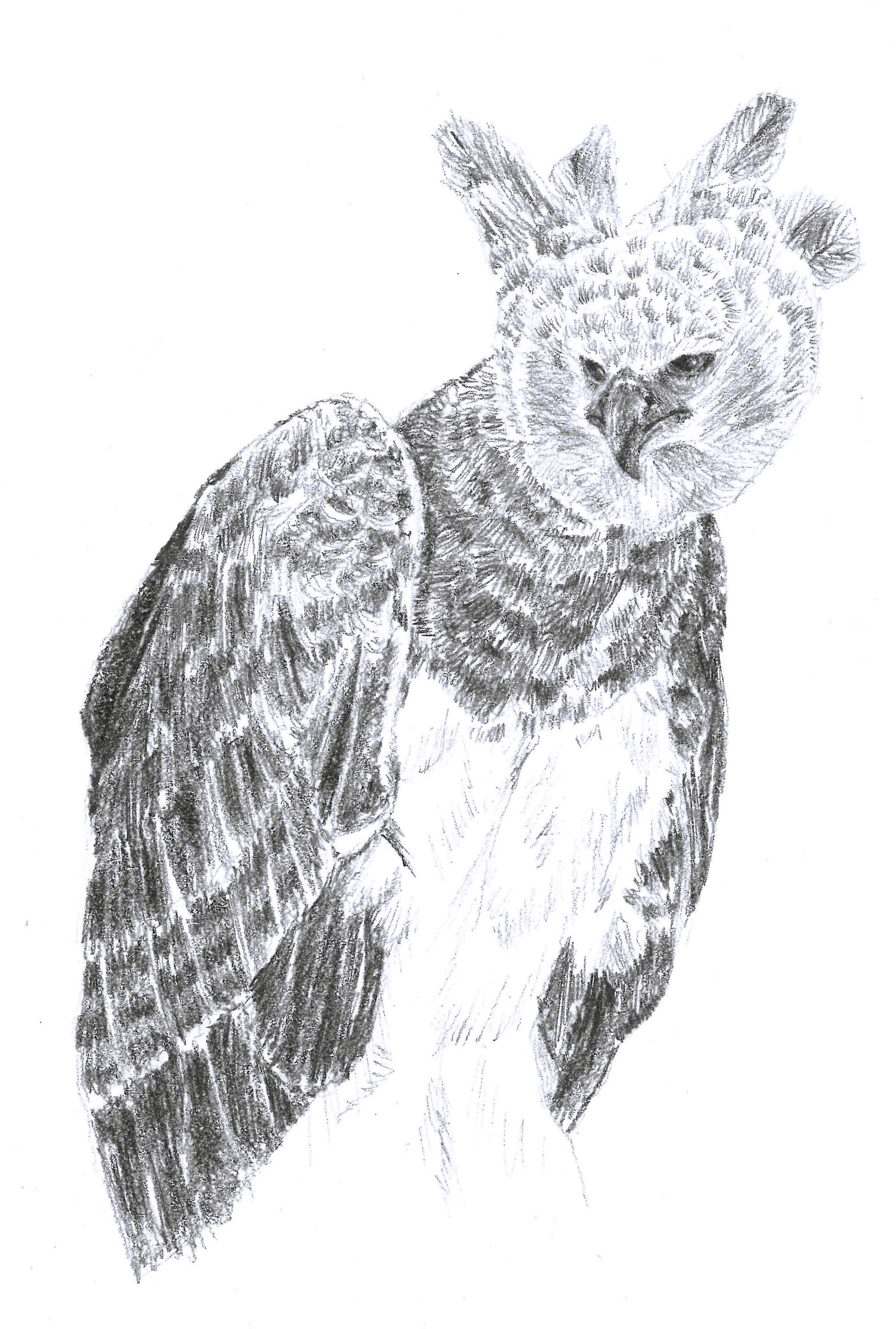
Meet this extremely badass bird that sports a Michael Olise hairdo.
The harpy eagle lives in the rainforests of Central and South America. Its wingspan of 6-7 feet (1.8-2.2 meters), though impressive, puts it a tad behind the world’s biggest raptors. It comes smaller than the bald eagle, whose wing unfurl 7.5 feet from tip to tip. Where the harpy may fall a little short in size, it makes up in its feet, which have a grip strength of 600 psi and talons that can grow up to 5 inches long, comparable to that of a grizzly bear claw. Its massive foot can easily engulf an adult’s fist.
Its dreadlocks-style crest is actually part of a facial disk that can perk up or lay sleek on the neck, similar to a frilled lizard. These head feathers help funnel soundwaves to the ears, allowing it to hear better and pinpoint the location of prey.
Nothing about the harpy eagle’s physique is accidental. The slightly smaller build grants maneuverability in a jungle, and bone-crushing talons are honed weapons for hunting sloths and monkeys.

In 1999, scientists released two radio-tagged harpy eagles on Panama’s Barro Colorado Island, a tropical paradise populated with monkeys that last saw aerial predators 40 years ago. Haven quickly became hell as the two ambush specialists terrorized the community of naïve prey that had forgotten all its instincts toward this former foe. But the monkeys quickly adapted, stationing sky sentries and developing alarm cries that probably meant, “Look out, there’s that strange-looking beast that popped up out of nowhere and now we have to deal with, so hide!” A year later, the scientists removed the harpy eagles from the island. The monkeys stayed paranoid — and likely traumatized — for at least seven more months after the experiment.
These days, the harpy eagle is the one that’s under siege. Besides habitat destruction, another major threat to the raptor is hunting — by curious humans who shoot down this swanky bird simply out of curiosity. It seems that the eye-catching appearance of the hunky harpy isn’t without a cost.
But in some places, attitudes are shifting. Now, bird tourism with the harpies as the star attraction has made preserving them more valuable than persecuting them. In Brazil’s Amazon rainforest, locals have built tower platforms so visitors can see the birds and their nests at eye level. After all, who can help but admire this magnificent bird — lethal, intelligent, dapper; wouldn’t you want to take a closer look?