A score of trained health workers stood at the ready to screen travelers in Kampala last year, one of the last lines of defense against a deadly disease making its way out of Uganda’s capital. Travelers breezed through a finely tuned screening system: staff checked their temperatures via ThermoFlash, and logged their contact information and answers from a comprehensive health questionnaire. With the screening completed, each traveler went on their way; unless they showed signs of Ebola. People with characteristic symptoms of the viral hemorrhagic fever would be flagged for additional screening, possibly isolated from the rest of the traveling public, or referred for medical attention. The goal was to stop potential Ebola cases from boarding flights to other countries, including the United States.
These are standard measures during Ebola outbreaks, which Uganda has experienced seven times since 2000.
In early February 2025, Uganda was in the middle of another following the death of a 32-year-old man in Kampala. Those standard measures should have played out at Entebbe International Airport. Instead, passengers were not screened properly, and the outbreak response, a delicate Jenga Tower, was mostly left to vibes.
Why? The International Organization for Migration, the organization contracted to help support Uganda with this work, was missing critical operating funds from the U.S. Agency for International Development, USAID.
The lapse in public health security did not go unnoticed. USAID’s acting assistant administrator Nicholas Enrich flagged the omission to the agency’s new political leadership. He testified before members of the House Foreign Affairs Committee on the dismantling of the agency and its consequences in late March. Funds had already been appropriated (approved by Congress) and obligated (legally committed to be spent). The new leadership only had to process the payment in the system, which Enrich said was well within their power.
Instead, “They couldn’t believe the partner wouldn’t work without money because this was such an important national security issue,” he testified.
I gasp.
I was not seated around the table in the baroque blue Room H-143 of the U.S. Capitol, but horizontal on my couch in northwest Washington, D.C., watching the shadow hearing via YouTube livestream.
I was one of the thousands of employees at USAID who lost my job early into the Trump administration 2.0. As a contractor based in the agency’s Office of Infectious Disease, I worked within the Emerging Threats Division, a mighty team of around 60 focused on preventing, detecting, and responding to new disease threats before they became global crises.
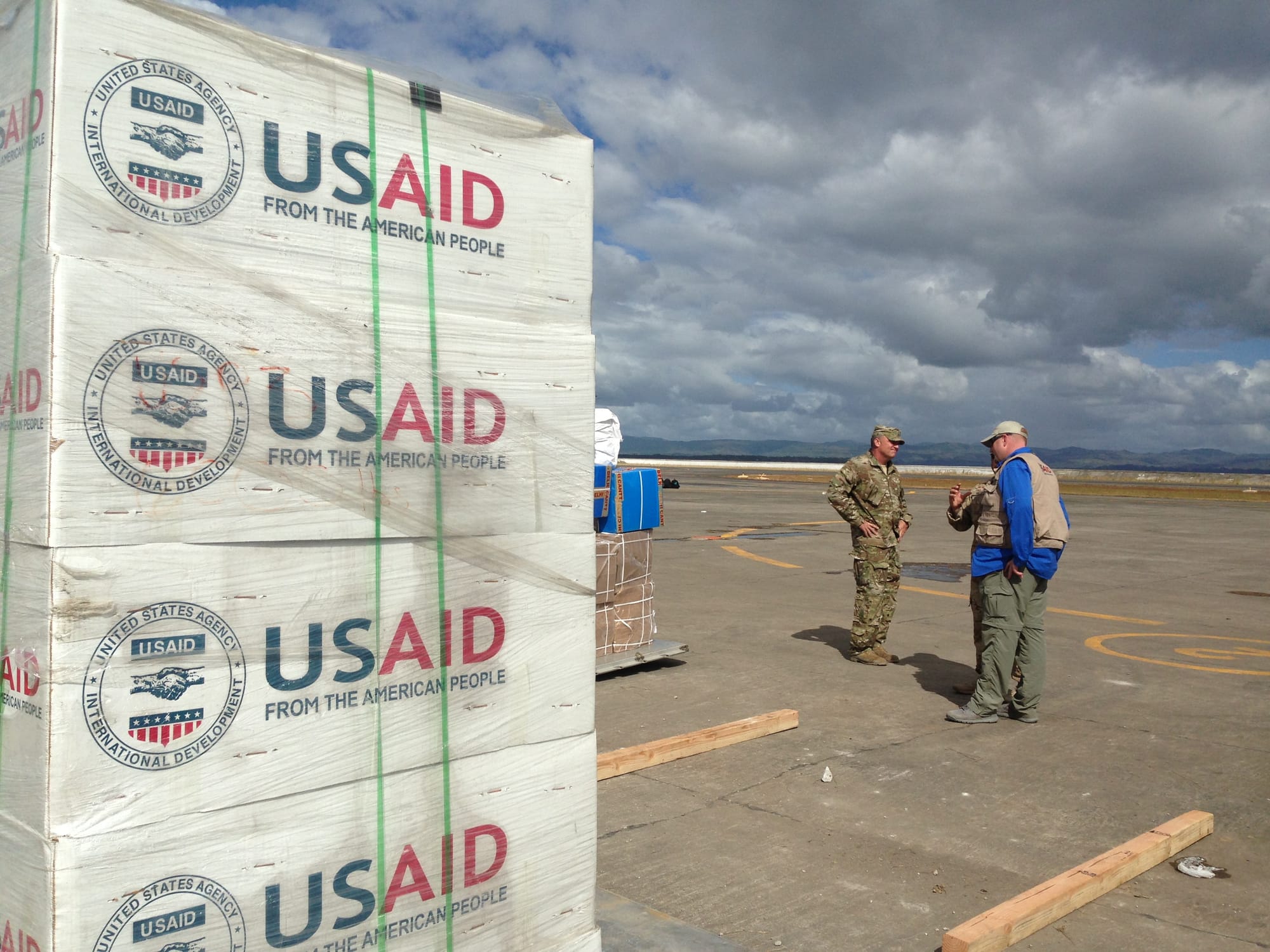
My colleagues designed and managed programs to close gaps between human, animal, and environmental health: building integrated, multisector surveillance systems; training workforces in a One Health approach; strengthening biosafety and laboratory capacity; improving risk communication and community engagement; and addressing drivers of emerging health threats like zoonotic spillover, the spread of antimicrobial resistance, and environmental degradation. We supported partner countries with technical expertise, deployed emergency resources, and coordinated across actors and sectors through USAID’s Global Health Security program.The program partnered with over 50 countries to stop outbreaks at their source and was central to the global management of COVID-19, Ebola, Marburg, mpox, and avian influenza responses.
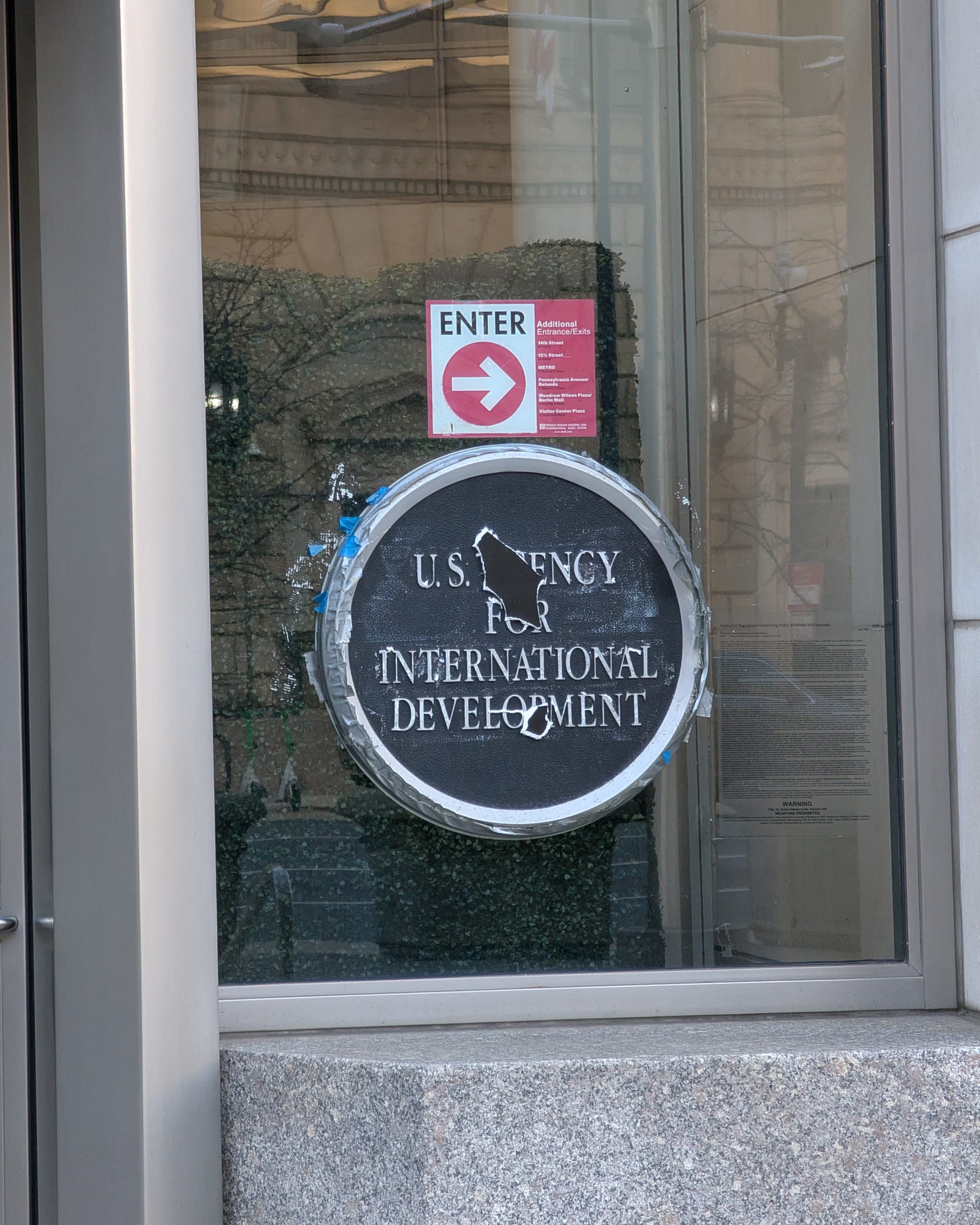
With foreign aid gutted, the operation is now a ghost town. The entire agency of 10,000 staff has shuttered along with the large swathes of its institutional support contractor and implementing partner network. And in July, the remaining global health programs transferred to the Department of State’s Bureau of Global Health Security and Diplomacy, where 48 USAID staff were hired over in a less-than-transparent process. The Global Health Security directorate of the Bureau is staffed by 21 folks, 18 of whom are dedicated to outbreak detection and response.
It should be obvious why I was so shocked at Enrich’s testimony. Not only is it absurd to ask someone to work for free or on goodwill, it’s a costly delusion. There’s always a price to pandemic preparedness, but the cost upfront in prevention and preparedness is significantly cheaper than the cost of crisis response, economic fallout, and lives lost later. If the U.S. won’t invest in stopping outbreaks at their source, the immense toll of an outbreak will fall on us.
The cost of skimping on global health
It’s stressful enough to lose your job. It’s more stressful to know about the diseases proliferating that your division was working to prevent. On January 30, two days after receiving my layoff notice, the Ministry of Health of Uganda officially declared an Ebola outbreak in the capital city of Kampala. At the time that USAID was (as Elon Musk put it) — being fed “into the woodchipper,” we knew of a new Marburg virus outbreak in Tanzania, a continued outbreak of clade 2 Mpox and a mystery illness in the Democratic Republic of the Congo, all the while H5N1 influenza cases rose within the U.S. Luckily, the Uganda outbreak was under control, likely due to investments that the U.S. Global Health Security program helped fund. But we may not be as lucky with future outbreaks.
Public health is invisible when done well. You don’t tend to hear about the many actors in the wings, the crisis fully averted. So maybe I shouldn’t have been as surprised by the Americans who quickly developed a fervent passion for government oversight and transparency, and who asked, “Why am I paying for that?” Many Americans have cheered for the destruction of their own insurance. I’ve seen this pattern play out time and time again in the months since being laid off: at best global health security work is deprioritized in a false dichotomy of “America First,” and at worst it’s dismissed as waste, fraud, and abuse.
Americans routinely overestimate the share of the federal budget spent on foreign aid — it’s about 1% — and according to Kaiser Family Foundation polling, once they’re corrected on this misconception, they are no longer as concerned about how much the U.S. spends on it. Many also believed helping others abroad meant neglecting those at home. But these resources have not been redirected to help make a healthier America by, say, funding human service programs or the social safety net.
William Herkewitz, a former head of communications for USAID missions, attributes this problem to a failure of agency PR to explain the agency’s work to the American public in the same way it has to lawmakers and beneficiary countries. “Because they never heard about the lives regularly saved by their tax dollars, Americans don’t realize the generosity that has been stolen from them,” Herkewitz said in a New York Times opinion piece. Nor do they realize that shuttering of the agency has come at a cost to them rather than savings, with the closure of USAID coming at an estimated $6 billion due to close-out costs and litigation.
Public health is invisible when done well. You don’t tend to hear about the many actors in the wings, the crisis fully averted.
It might be hard to conceptualize in Pennsylvania, where I’m from, how supporting a lab in West Africa or Southeast Asia helps anyone back home. But those investments allow for early detection of emerging threats before they reach U.S. soil. They fund surveilling drug-resistant strains of TB before they are permitted to evolve and spread, and they fund clinical trials that lay the groundwork for the vaccines and treatments Americans rely on.
When it comes to infectious disease, there was never an either/or between domestic and international health. The American values of individualism, self-sufficiency, and “pulling yourself up by your bootstraps” do not apply here. Just as we don’t get to personally pay for only our favorite tree in the national park we visit or the most charismatic animal at the zoo, we don’t get to cherry-pick the superbacteria combo we are most afraid of because we don’t know which pathogen will emerge as the next threat. The only effective strategy is to strengthen the entire system because public health is inherently upstream and inherently global.
Funding public health work is a strategic cost-saving strategy, not a charity endeavor. And the cost of an outbreak is staggering. In 2014, the economic and social burden of the West Africa Ebola outbreak was estimated at $53 billion globally by a study from the Journal for Infectious Diseases. Deaths from non-Ebola causes during the outbreak added over $18 billion in lost productivity for West Africa.
When we divest from global health, we forfeit trust, global cooperation, access to information, and hard-earned technical expertise. And we’ve already started to lose out. In May, the U.S. sat out of the landmark pandemic treaty and, just recently, the U.S. officially completed its withdrawal from the World Health Organization.
Surveillance and outbreak response are thankfully still mentioned in the State Department’s “America First” Global Health Strategy. But without many specifics around implementation, we’re left to our concerns about rapidly reducing funding for help on the frontlines and beyond.
Moral work
In the midst of watching my field collapse, my friend sends me a podcast of Dutch author Rutger Bregman making the rounds promoting his new book called “Moral Ambition: Stop Wasting Your Talent and Start Making a Difference.” The episode is called “Why you should quit your job and change the world.” I’m tempted to throw my phone into my fireplace.
I can think of thousands of people who were making a difference in their jobs, whose talents are now being wasted in odd jobs completely unrelated to their training or in the stress of long-term unemployment. They're lost in the bowels of applicant tracking systems, scrolling through the LinkedIn AI influencer wasteland, and dealing with the moral injury of watching Americans self-destruct on their own health and well-being. To say nothing of the group chats of my colleagues and connections circulating opportunities for making bizarre pivots to influencing and even working in a morgue.
We know how to vaccinate populations, trace outbreaks, and build resilient health systems. There are tens of thousands of capable public health professionals who want to be on the front lines, but there's no longer federal funding for that work to continue.
 Max G. Levy
I agree with Bregman’s premise that we need more smart people doing meaningful work, but inspiration is not the problem. His framing overemphasizes personal responsibility and passion, while ignoring the need for the systemic support, infrastructure, and funding that actually makes this “moral work” feasible, sustainable, and attractive. We are not moving in the right direction: the Department of Education’s recent proposal to exclude public health degrees and other health programs from the definition of “professional degree programs,” which would restrict graduate loan options for the very people we say we want in these fields, discouraging enrollment and possibly weakening the pipeline of the future health workforce. At the very least, we could work towards not deliberately traumatizing public servants or insinuating they shouldn’t expect to be paid for 43 days, as was the case in the recent record-breaking shutdown. Until we shift from treating work in the public interest as a matter of individual sacrifice to fostering collective responsibility, we will continue to fail those who are doing the work. And until we invest in people and systems, rather than throwing money at crises after the fact, our most essential work will remain our most precarious.
As Anne Helen Peterson puts it in Culture Study, “when a civilization is limited to work that produces profit, we don’t just lose the artistry and texture of everyday life. We distance ourselves from the values of care and generosity — and the simple but profound belief that what happens to one of us affects all of us. We become further atomized, cruel, and careless with others, incapable of planning any further than our own lifetimes. We fall out of love with the world.”
Until we shift from treating work in the public interest as a matter of individual sacrifice to fostering collective responsibility, we will continue to fail those who are doing the work. And until we invest in people and systems, rather than throwing money at crises after the fact, our most essential work will remain our most precarious.
Eight months later and still unemployed, I attended a public health masters alumni event. I tried to figure out how to introduce myself. I contemplated “retired” (I’m 30), but went with “former USAID.” Someone in the group asked me how the job security is these days at USAID. I tilted my head, bewildered.
Twelve hours and 6 miles deep into a day of hustling between UNGA and Climate Week events across New York trying to network my way into a new field, and I forget to smile and soften my delivery.
“What do you mean? The agency was eliminated.”
“Yeah… it was really dramatic,” an alum next to me pipes in.
I instantly felt a bit Mean Girls, like I’ve accidentally ganged up on this peer who just wanted a nice evening and new connections. Yet somehow this wasn’t the first or last time I’ve fielded this question. If even educated professionals in my broader public health field can’t keep score of what’s lost, I worry how the general public is faring in the wake of the Trump administration’s flood the zone tactics.
USAID was, of course, only one actor in the global health security architecture, but it was the index case. The same tactics used to hollow it out and eventually dismantle it – firings, confusion, reversals, reinstatements, censorship, fear, vanishing transparency, collapsing morale – are those being applied to other federal agencies.
When — not if! — the next outbreak comes, we'll pay exponentially more for crisis response than we would have spent on prevention. “It’s too late to save USAID. The question now is whether we can still save America’s willingness to show up when people are dying,” Herkewitz poses. I’m concerned that I think I know the answer.
This essay was produced through Sequencer's Storytelling Mentorship Program. Your support through donations and subscriptions helps early-career scientists and creatives tell stories you won't find elsewhere.
If you can spare a few bucks, consider enabling us to continue this work with a one-time donation or regular subscription. Thank you.