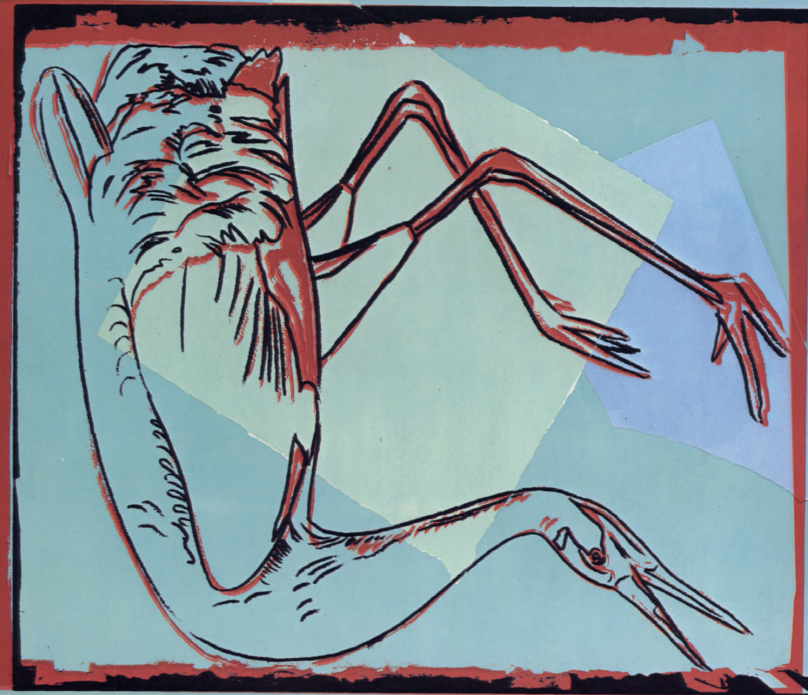
In a small dimly lit laboratory thirty miles north of the San Diego Zoo, animal scientist Ann Misuraca showed me the eye of a whooping crane. Misuraca had minced the translucent organ into a pile of wet pieces. “It’s tough,” she told me with a scalpel in hand “I’m taking a piece from the back.”
The crane had been found dead in another state, but its genetic utility could live on. So wildlife managers shipped the eye to Misuraca and her colleagues to support conservation through a 50-year-old program called the Frozen Zoo.
The Frozen Zoo is a biobank, a collection of cells preserved at -320°F. Many of the cells come from imperiled species around the world. Some are reproductive cells, and others are somatic cells, like skin cells, that capture an organism’s full genetic blueprint.
“When an animal dies in the zoo, they're no longer there,” said Marlys Houck, Curator of the Frozen Zoo. “But they stay in the Frozen Zoo. You don't ever lose any of them.”
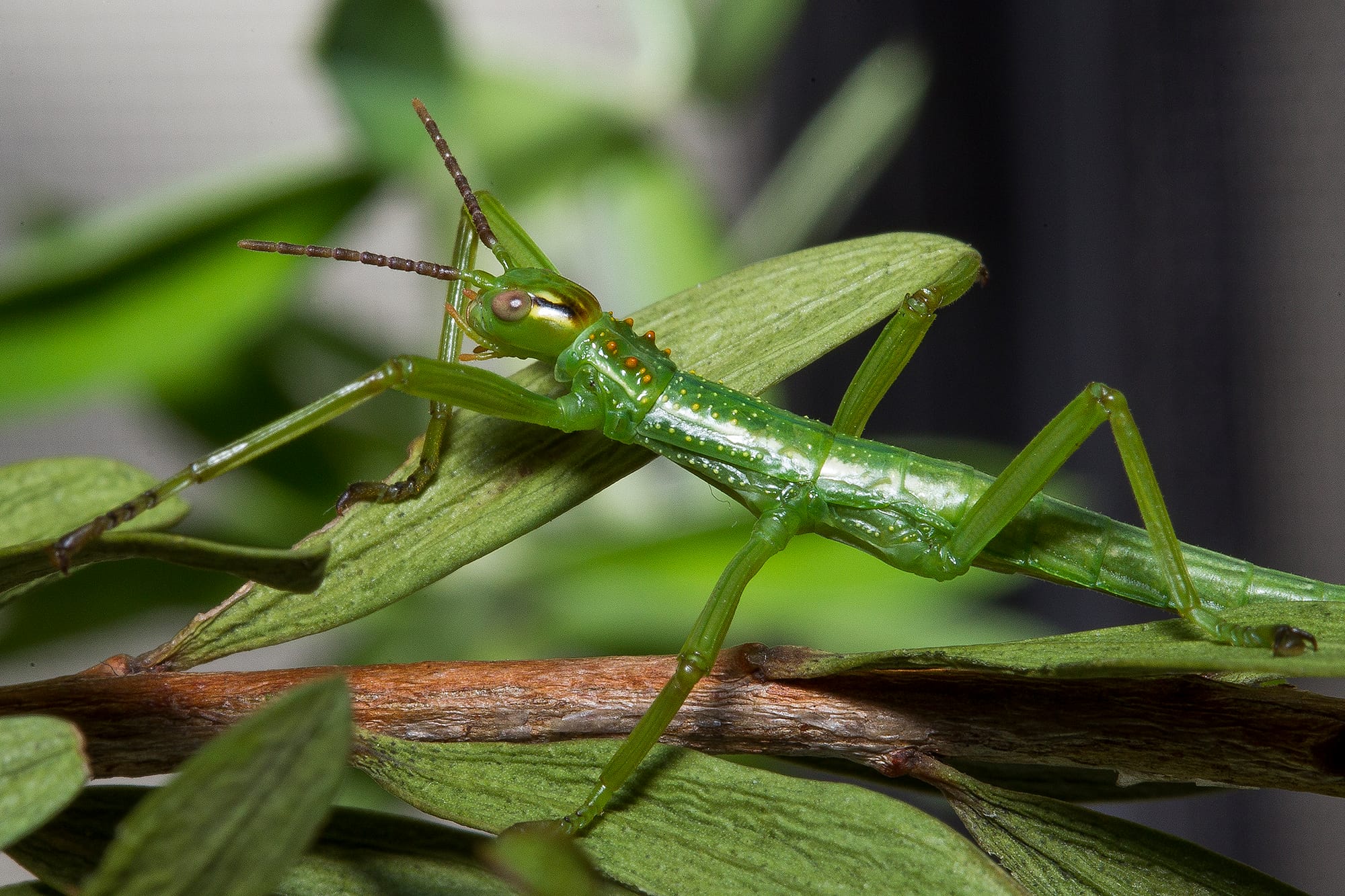
Lord Howe stick insect. (San Diego Zoo Wildlife Alliance, Max Levy)
Misuraca cleaned and cut the crane’s eye according to protocols refined over several decades. It’s the same basic method as Houck used to cryopreserve the last male Po'ouli, a Hawaiian bird, in 2004 before it went extinct.
The Frozen Zoo began as a biodiversity bank just for specimens from the San Diego Zoo. Now, the biobank, managed by the zoo, stores specimens from all over the world. It cryopreserves tissue of animals from zoos and the wild.
The flashiest reason to biobank is for cloning. In 2001 cells from the Frozen Zoo were used to clone an Indian bison called the gaur. Scientists transplanted the DNA-loaded nucleus from preserved skin cells into the egg cells of a domestic cow, which then carried the embryo. The newborn died shortly after birth, but the team felt reassured that this level of biological engineering seemed feasible. And it was.
In 2020, cells from the Frozen Zoo gave rise to Kurt, a cloned Przewalski's horse which went extinct in the wild in the 1980s. That December, the Zoo welcomed Elizabeth Ann, a black-footed ferret cloned from cells of an individual who died in 1988. Black-footed ferrets are one of North America’s most endangered mammals, with only a few hundred remaining in the wild. (The San Diego Zoo Wildlife Alliance provided cells from the Frozen Zoo to the company Viagen, who does the cloning.)
But the more tantalizing engine driving work at the Frozen Zoo is the meticulous upkeep of specimens with no stated destiny. The researchers here devote hours, weeks, months to microscopic cells with no guarantee — nor any idea — of how they might be used.
The Frozen Zoo feels neither “frozen” nor “zoo.” When I visited the Frozen Zoo in the fall, the only things resembling zoo animals (aside from one excised bird’s eye) were photos of various creatures. Lab incubators hum over the white noise of biosafety cabinets where a researcher cultured animal cells in plastic flasks. Just like any swab or bacteria or fungi, you can grow animal tissue in plastic dishes if you know what nutrients, antibiotics, and temperatures they need.
The lab’s mammalian cell incubator—adorned with a photo of a fennec fox—is usually set to 37 Celsius. Bird cells seem to prefer incubating three to five weeks at 40 Celsius. Frogs are a whole other beast, so to speak. The Frozen Zoo has successfully preserved tissues from species like the critically endangered Panamanian golden frog. Amphibian cells are probably the most difficult to cultivate and cryopreserve, Houck told me. Of the 120 individual Panamanian golden frog specimens the team has received, they’ve only managed to freeze two.
 Max G. Levy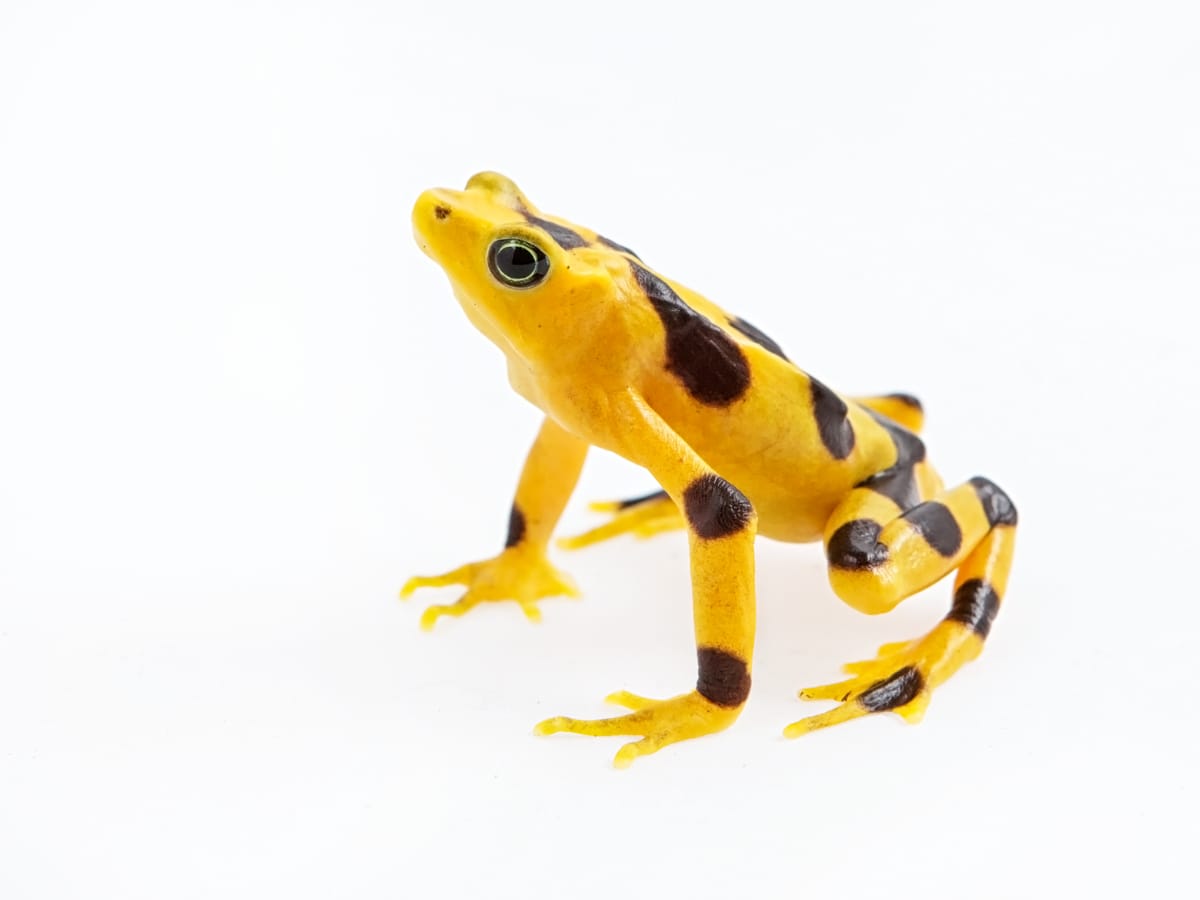
“Nobody really knows how to grow amphibians that well,” Houck told me. One species took two years to cultivate enough cells. Another, which they named Valentine, took a full year of trial and error from one Valentine’s day to the next to successfully preserve. “That was the last year-long frog we've had,” Houck said. “We're trying to get better.”
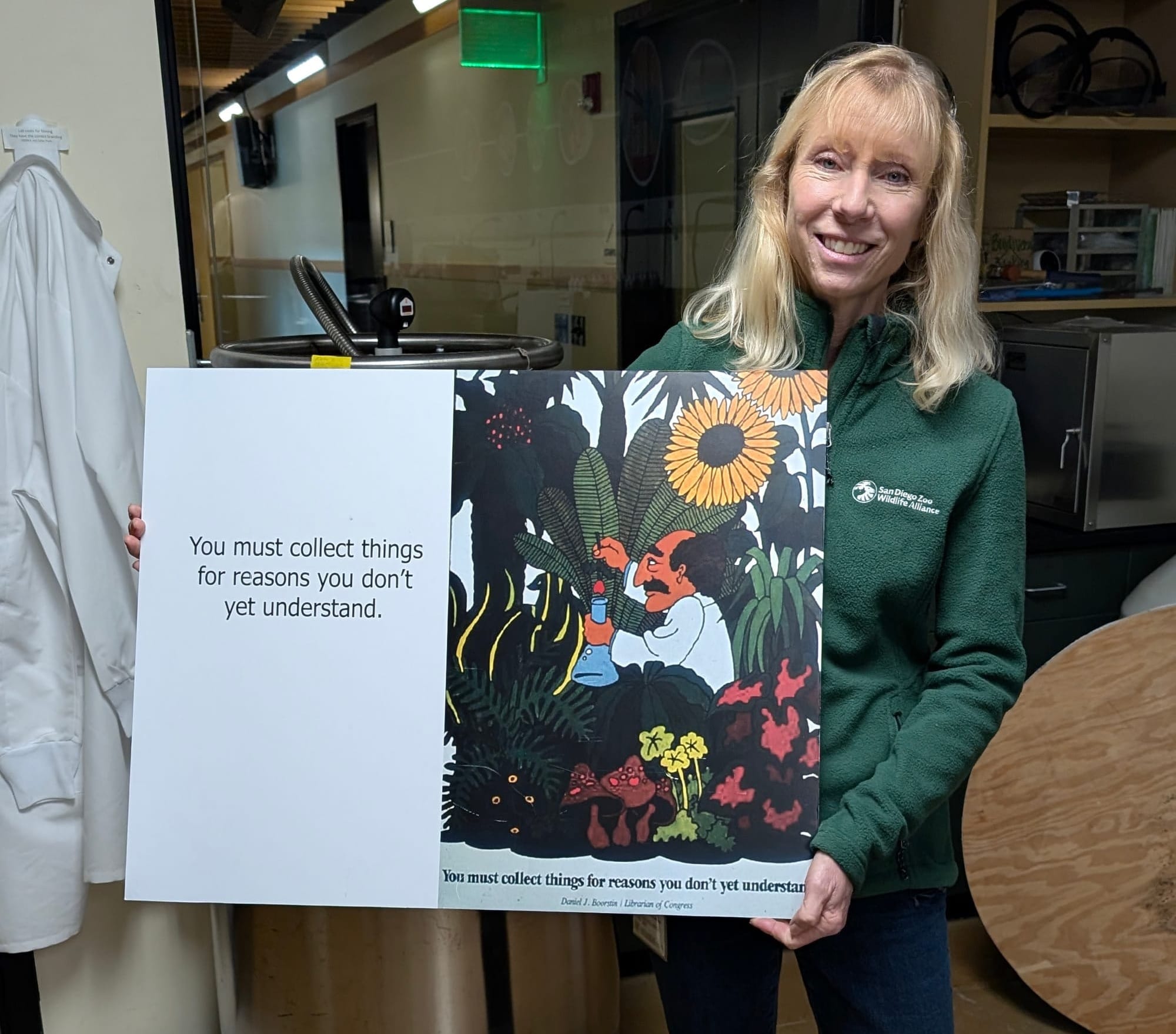
She shows me a poster with a quote from Daniel Boorstin, a historian and former Librarian of Congress: “You must collect things for reasons you don’t yet understand.”
According to Houck, the nitrogen tanks currently preserve over 11,700 samples, representing over 1,350 species. Roughly 350 new samples are added to the collection per year. Many come from the same species. (Individual diversity is an important piece of biodiversity, too.) The samples onsite live in eight or so tanks and backups. Katy Thomson, another researcher, showed me a vial containing cells from an African penguin also named Katy that she proudly got to preserve. Frozen Zoo has evidently benefited from decades of their experience to take on even more biodiversity.
A few days after my visit, the team announced adding the first-ever insect: a Lord Howe Island stick insect from Australia once thought to be extinct. The team preserved this stick insect’s sperm using methods they practiced with sperm from other animals. Still, each species and their sperm brings its own quirks. Even within mammals, sperm can have different shaped heads, tails, and proportions. “Everything I freeze is different,” she said. “Today, I'm getting a snake. So I need to see what family it is because even [sperm from] the families of snakes are different.” She likens the stick insect’s sperm heads to somewhere between a reptile and a bird.
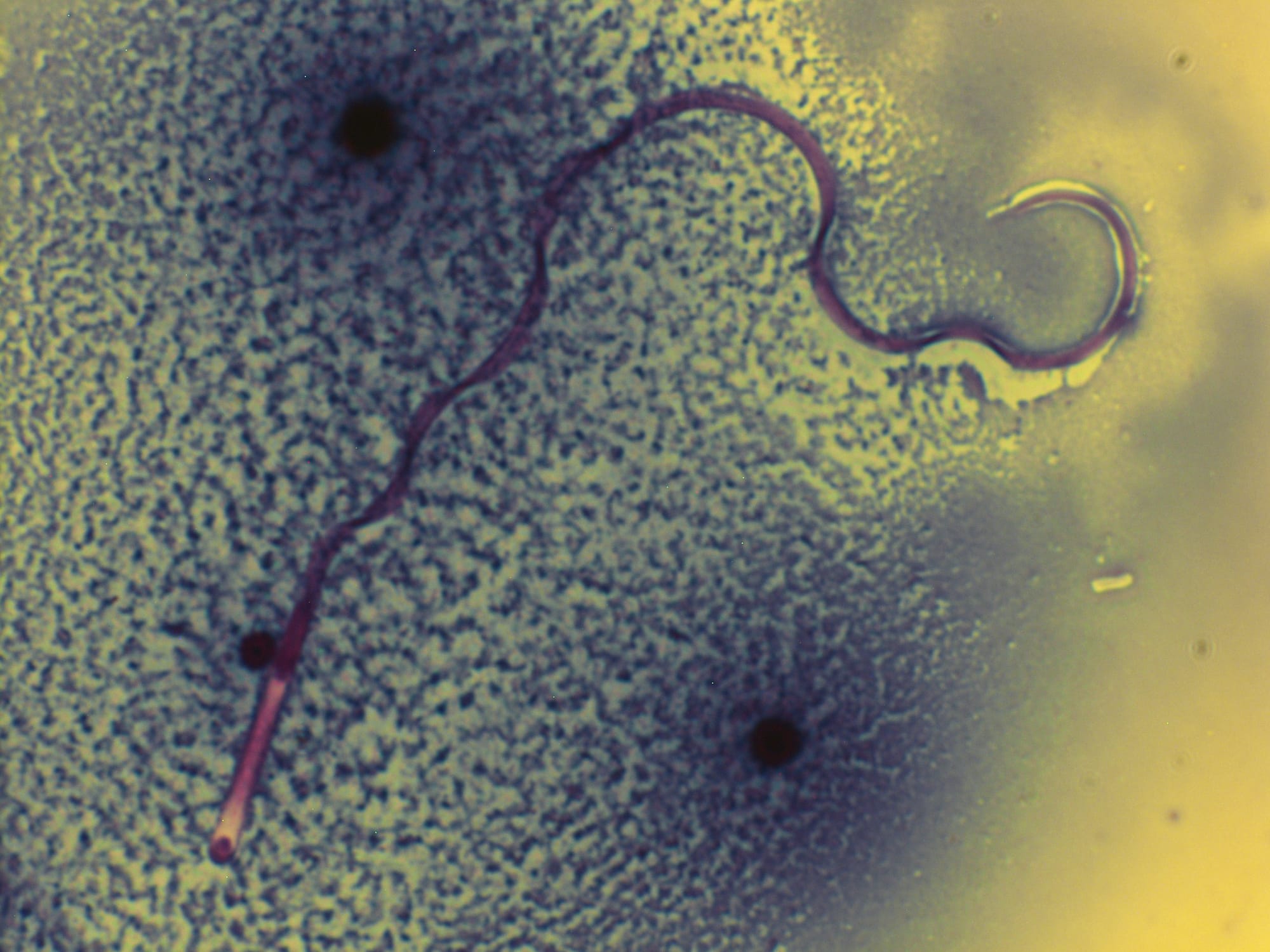
Scientists developed the basic principles of cryopreservation long before they knew how they would apply that knowledge in the future. For example, Houck didn’t expect to help solve a 2003 mystery that befuddled scientists at the Kansas City Zoo of why Nick the tiger just wouldn’t breed. “They thought the females were the problem,” Houck said. “So they kept putting him with different females.” A later diagnosis revealed that Nick had an XXY chromosomal disorder, so his semen contained zero sperm.
The team’s expertise has come in handy for rescuing the sunflower sea star decimated by bacterial disease up and down the Pacific coast. The Zoo’s reproductive sciences team was asked to freeze reproductive cells from the endangered sea stars. “No one had ever done this before,” said Carly Young, lab manager for reproductive sciences. The team developed a new protocol by practicing with less endangered aquarium species like bat stars. Exactly 100 attempts and a full year later, they now have a protocol they can follow to one day grow and release sunflower sea stars.
“Even if it's not for cloning a species tomorrow,” Young said, “it's still contributing immensely to the genetic study.” The biobank research helps identify specific genes relevant to animal diseases and behavior. And the zoo is spreading that knowledge and capability by helping establish cryopreservation biobanks in Vietnam, Peru, Kenya and Hawai‘i. The utility of this program will only grow as biotechnology develops.
In 1986, the Frozen Zoo’s creator, Kurt Benirschke, coauthored a book with artist Andy Warhol titled Vanishing Animals. The book’s seventh chapter depicts the plight of a whooping crane. “For a while it looked as though the whooping crane would follow the passenger pigeon into extinction,” they wrote. “We now know something about their biology and we can afford to be a little more optimistic about their future.”
Whooping cranes have bounced back from about 20 individuals in 1941 to hundreds today. The birds remain on the endangered list, and the current administration has attempted to strip important habitat protections. The future is uncertain. But the dimly lit laboratory of San Diego’s Frozen Zoo is accustomed to the darkness.