

By Em Dobberfuhl
On Oct. 24, 2024, NASA blasted the spaceship, Clipper, toward the solar system’s largest planet. Its mission: to determine whether Jupiter’s icy moon, Europa, is habitable, and maybe even sniff out life itself.
Scientists think that Europa, despite it being a frozen world, is a promising location to look for life. That’s because its balmy subsurface ocean is rife with organics, potentially containing the right ingredients to brew up microbial life that might survive even in the absence of light.
However, detecting life isn’t that straightforward, and scientists have many past failures to show for it.
Seeking out life across the solar system and beyond is riddled with challenges. The vast distance between Earth and other worlds means spaceflight missions are logistically challenging, and may take decades to arrive. Telescope observations of far-flung planets already have a hard time discerning life's weak signals from the noise.
Astrobiologists often count on detecting molecular clues of life called biosignatures. But even these hints are rarely smoking-gun evidence. Some biosignatures associated with life can also be produced in other ways, such as through geological processes. The presence of complicated biomolecules like DNA or proteins would be undeniable evidence of life, but there’s also no guarantee that life across the universe is made from these same building blocks that Earthlings share; instead it may be wired with truly alien biology altogether. Therein lies the difficulty of detecting life as we don’t know it — how can scientists recognize the kind of bizarre biology that doesn’t have familiar complex molecules and carbon chemistry?
Despite past failures, scientists have made progress by learning from times when they thought they’d discovered extraterrestrial life. Our failures in the past have taught many key lessons, pushing astrobiology as a field to sharpen their methods and broaden their approaches — and not leap to conclusions. After all, to quote Carl Sagan, “extraordinary claims require extraordinary evidence.”
‘Phosphine gas’ on Venus: The molecule of life that never was
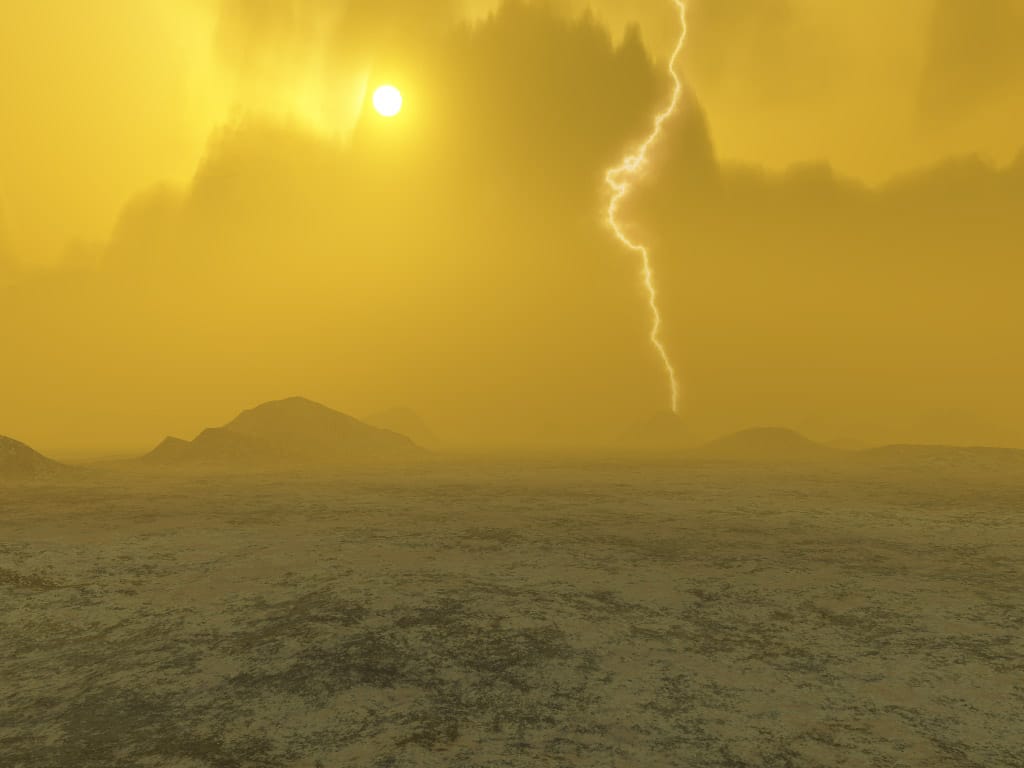
At first glance, Earth’s sister planet Venus seems like an unlikely home for life. A toxic atmosphere blankets a scalding surface that houses raging volcanoes. Still, scientists think life could reside here by sheltering in an unlikely place: high up in the atmospheric cloud layer, where temperatures are cooler and pressures aren’t quite so crushing. Might it be possible that life could find refuge here on an otherwise inhospitable planet?
For a time, researchers thought they found an affirmative answer. In 2020, astronomers from Cardiff University detected phosphine gas on Venus. On Earth, phosphine is produced in trace amounts by human and microbial activity. Its detection on Venus led the researchers to speculate that the same biochemical reactions — or at least, a newfangled chemical process — were unfolding in the cloud layers on Venus.
The leap in logic is almost too extraordinary, other researchers argue, because the science is simply not there yet, the uncertainty too great. Scientists still have many unanswered questions about Venus and its environment. Moreover, scientists still aren’t in complete agreement whether phosphine truly exists on Venus in the first place in the abundance levels first reported in the study, so more data is needed to put the controversy to rest. It may fall to upcoming NASA missions to Venus, such as VERITAS and DAVINCI, to help scientists get there.
A mysterious Martian meteorite
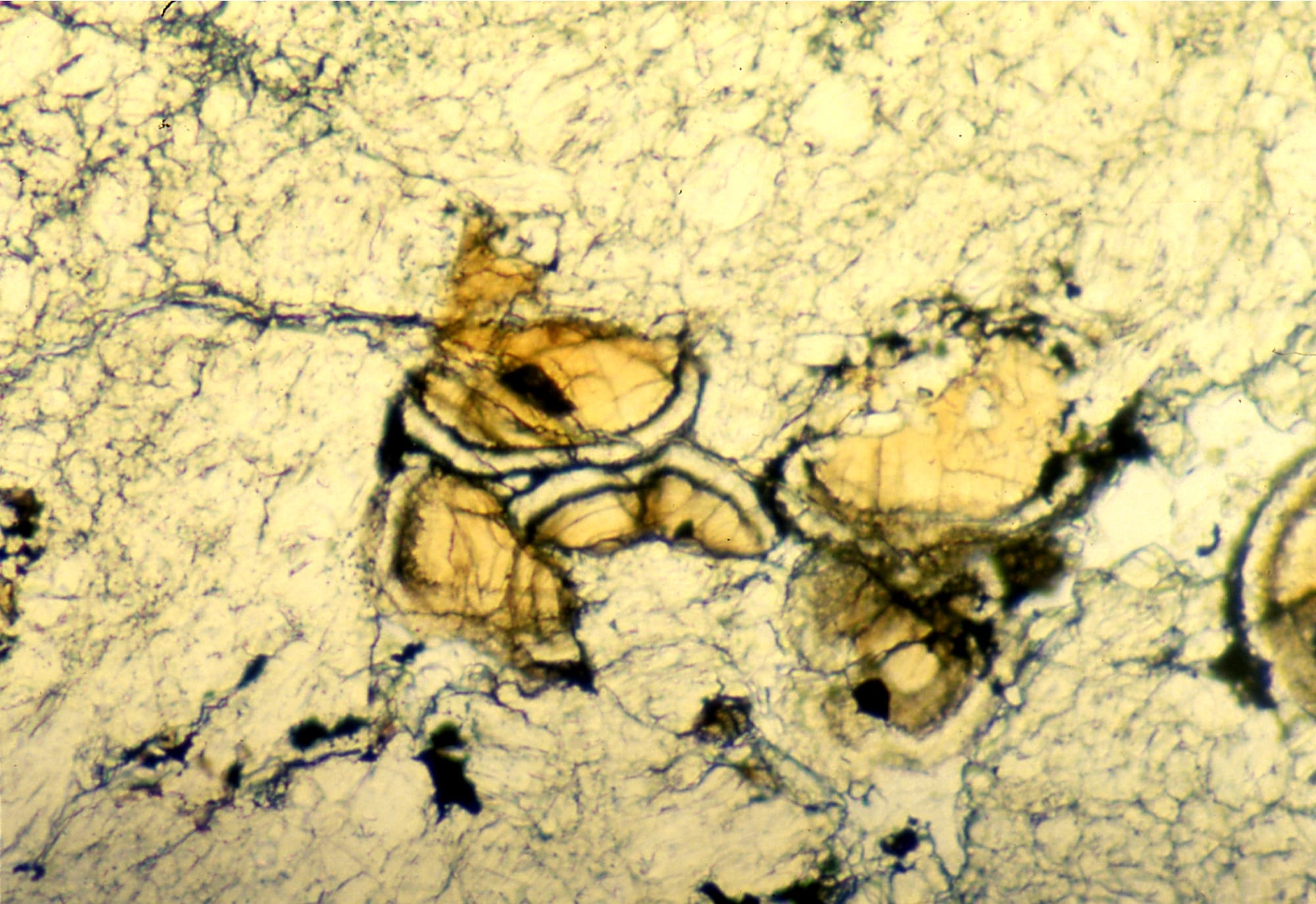
In 1984, a palm-sized rock resembling partially melted cinderblock was plucked from the Antarctic ice, its home for 13,000 years. It was in fact a billions-year-old meteorite from Mars. And unlike other recovered Martian meteorites, ALH84001 displayed curious features that, upon first inspection, seemed to hold signs of ancient extraterrestrial life.
Under the microscope were bumps and ridges that looked like the doing of past microbial life. The most tantalizing clues were small, worm-like features as well as magnetic crystals thousands of times finer than the width of a human hair and similar to Earth’s fossils of bacteria. Additionally, carbonate globules — lumpy structures in the rock indicative of past water on Mars — suffused atomic fractures in the rock.
However, many scientists disagreed with the conclusion that ALH84001 bore remnants of life. Critics said there wasn’t sufficient proof because each line of evidence — the wormlike features, the magnetite, the carbonate globules — were too ambiguous. Others attributed the meteorite’s bizarre surface to contamination during sample preparation or at best just newly discovered chemistry. Even the most intriguing internal structures could simply be partially dissolved carbonate, a geological red herring. The debate dragged on for decades.
The nail in the coffin came in a 2022 study, which showed that the organics on the face of the meteorite arose from water-rock reactions on Mars that also occur on Earth. Since this revelation, scientists have had to reckon with geology’s ability to cook up complex chemistry that can easily be mistaken for biology.
Life on Mars redux? Thank methane, not just David Bowie
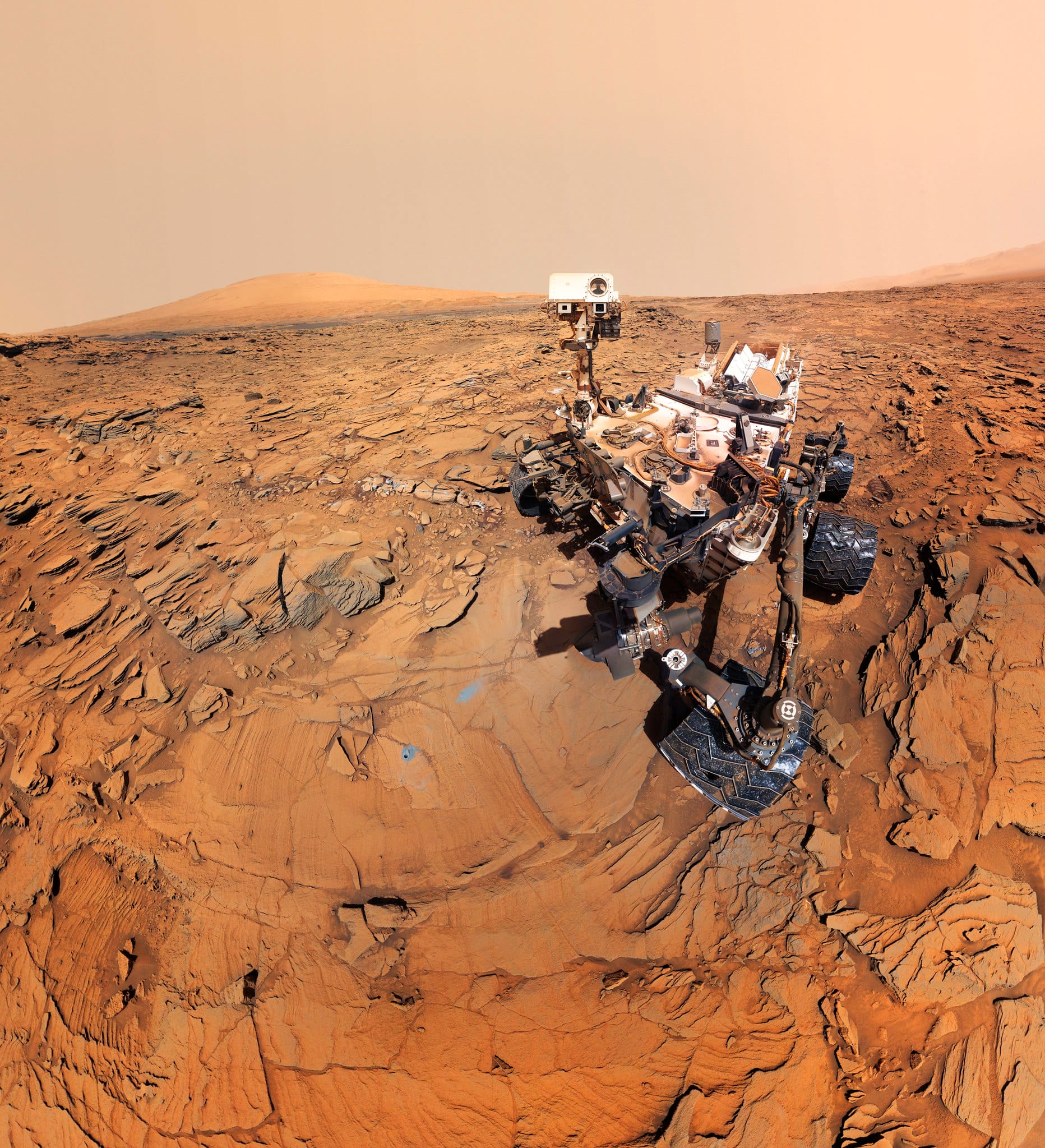
In 2004, scientists detected methane on Mars, which unlike phosphine, was confirmed to be present. Methane is a common gas on Earth, and 90% of it comes from biological processes. Methane on Mars is a curious feature as it is a transient molecule, only lasting around 300 to 600 years until it is degraded by solar radiation. The fact that it exists on Mars at all means some sort of process must keep replenishing it in the atmosphere. Perhaps this methane is a product of long-extinct life, scientists surmised, and was frozen in the upper layer of Mars’ surface, only now escaping as the temperature and pressure of the planet change.
This evidence may seem like a promising sign of extraterrestrial life, but the existence of just one molecule associated with life isn’t a definitive biosignature; it’s too flimsy to confirm the presence of life. For now, scientists still presume that methane on Mars comes from the rock-water reactions in the ground, as does the 10% of methane on Earth.
Although it seems like a letdown to not find aliens on Mars, understanding how life doesn’t evolve can be just as valuable. The presence of methane is explainable by nonliving processes even though its abundance on Earth is correlated with our biosphere. This understanding can lead us to more clear understandings of how life did evolve here, and the lessons learned help shape our future searches for life. In more recent headlines, the rover Perseverance is currently exploring the formerly water-rich Jezero Crater on Mars, a promising place to confirm whether the red planet once housed life.
A false alarm 124 light years away
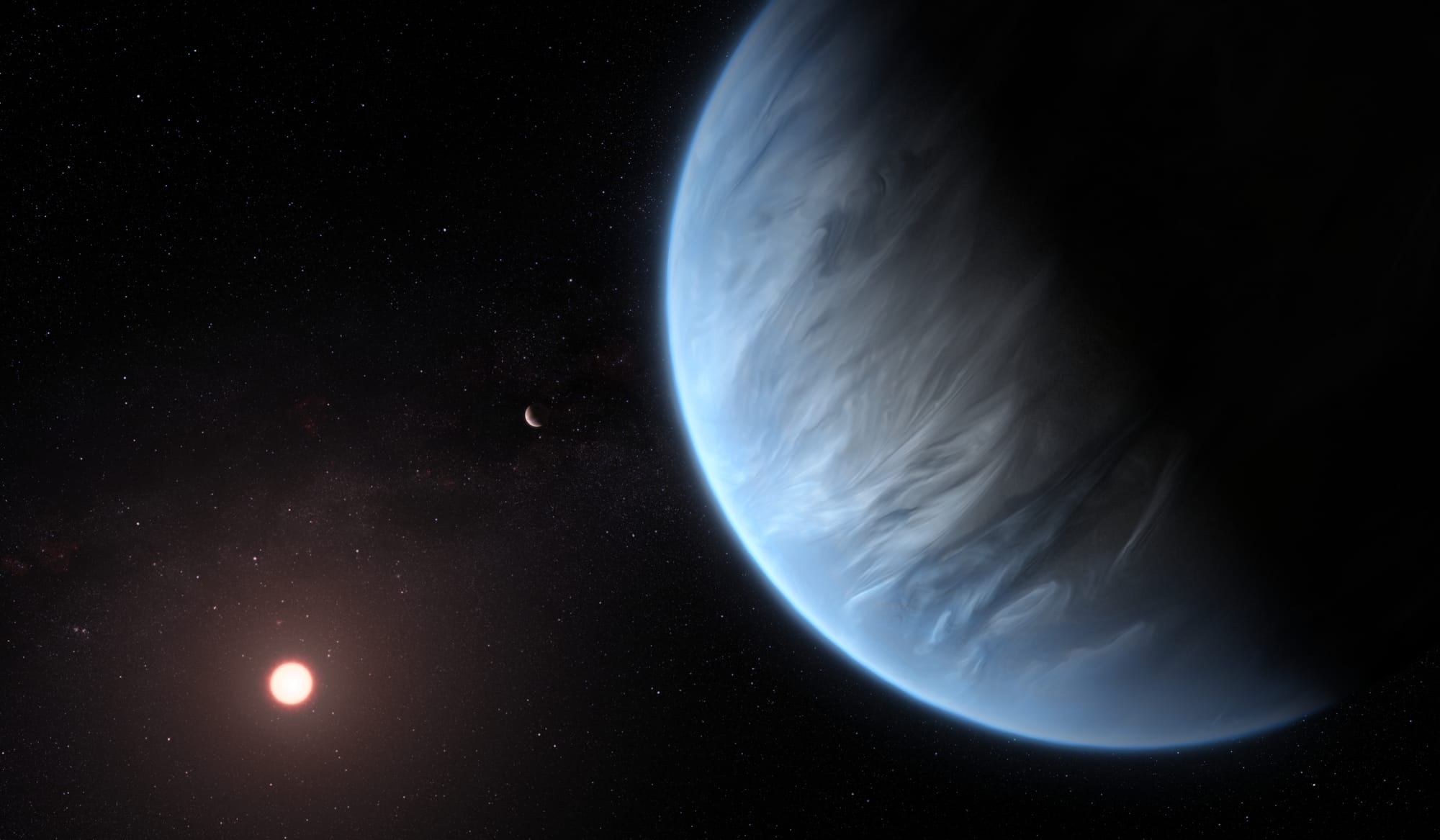
The exoplanet K2-18b is a world 124 light years away, 2.37 times the size of Earth. It orbits a star slightly smaller and cooler than our own sun — lying uniquely within the star’s habitable zone.
When scientists pointed the James Webb Space Telescope at K2-18b for molecular clues in 2024, they caught whiffs of methane, carbon dioxide, and dimethyl sulfide in K2-8b’s atmosphere, molecules that alluded to life.
But confirming the presence of these molecules from a distance has proved tricky. The detection of a handful of molecules barely scratches the surface of the K2-18b’s possibilities — although scientists know K2-18b houses some of the essential organic molecules crucial for life, other molecules like water or ammonia haven’t been found. This instance illustrates the challenges of painting a picture of extraterrestrial life on a far-flung planet without having all the facts.
Still, making these observations at all is already no small feat. Exoplanets lie tens to thousands of light years — millions of times the distance between Earth and Mars — away from us. Nevertheless, in the last two decades, scientists have discovered over 6,000 of them, thanks to the Kepler Space Telescope, TESS (Transiting Exoplanet Survey Satellite), and James Webb, which have revealed the nature of these worlds with new clarity. While we haven’t been able to conclusively find life yet, the sheer numbers of foreign worlds inspire the idea that life may lurk among them — even if it’s just one lone exoplanet in a cosmic desert.
Do aliens listen to the radio?
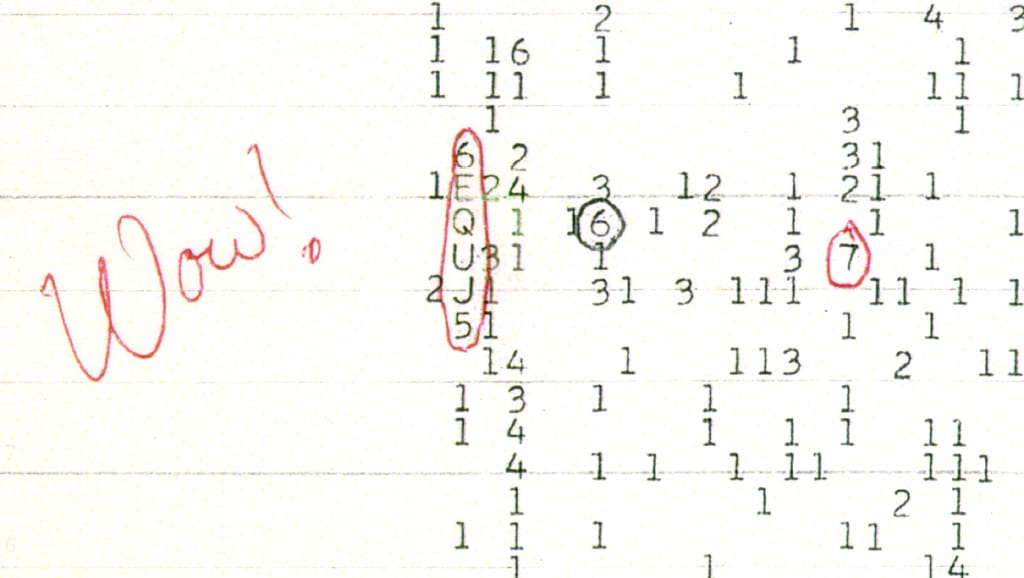
In August 1977, the Big Ear Radio Telescope housed at Ohio State University detected an unusual radio burst that lasted almost a minute. It was dubbed the “Wow!” signal to echo the reaction of the scientist who scribbled this exact phrase in the data printout. The signal sparked speculations that it came from an extraterrestrial civilization advanced enough to develop radio technology and holler into space by way of an interplanetary greeting.
It was also detected at a very specific wavelength, like how humans use particular radio wavelengths to broadcast information through television, phone, or satellite communication. Yet, the signals are, to date, not confirmed to be of any known natural astrophysical origin. The “Wow!” signal inspired the creation of the Search for ExtraTerrestrial Intelligence (SETI), a nonprofit organization dedicated to their mission by listening for radio signals beaming from the cosmos.
The signal never repeated itself, so its origins remain unknown. Since then, there have been few other credible radio signals that scientists think came from intelligent life. Nevertheless, SETI isn’t pausing its search — this unique approach adds to the diversity of methods that scientists use to search for life, increasing the chances of finding a glimmer of life in the dark interstellar void.
The search continues

The limits of searching for life as we know it have inspired the idea of looking for an “agnostic” biosignature, an indicator of life that universally relates to life both as we know it or don’t. Instead of looking for a single molecular giveaway, scientists also hunt for patterns in the groups of chemicals present.
A few promising methods have emerged. One approach considers planetary complexity by analyzing the intricacies of the surface and atmosphere of a planet. Life is believed to be able to cook up complex molecules and leave certain impacts on its environment. Earth, for instance, is more dynamic of a planet compared to the moon, because it’s shaped by life. Another idea is that life might be discernible based on how complex a molecule that it makes is. The more trouble that a chemist would have to go through to synthesize it from scratch, the higher the chance the molecule is made from life.
Most recently, the arrival of a new, sophisticated tool has opened doors to recognizing patterns among life’s chemical signatures in order to categorize whether samples have living or nonliving roots. Thanks to computerized machine learning, an array of samples can now be analyzed by a trained model to find patterns in the molecular data that humans might miss.
It’s an exciting time to be an astrobiologist, as this group of pundits can now explore Earth’s cosmic neighbors with the most advanced technology yet, such as Clipper, which will arrive on Europa in 2030. And long after that, scientists won't likely ever stop searching, staunch in the quest to understand what it means to be alive.
This essay was produced through Sequencer's Storytelling Mentorship Program. Your support through donations and subscriptions helps early-career scientists and creatives tell stories you won't find elsewhere.
If you can spare a few bucks, consider enabling us to continue this work with a one-time donation or regular subscription. Thank you.